You asked
Should I choose white board or kraft?
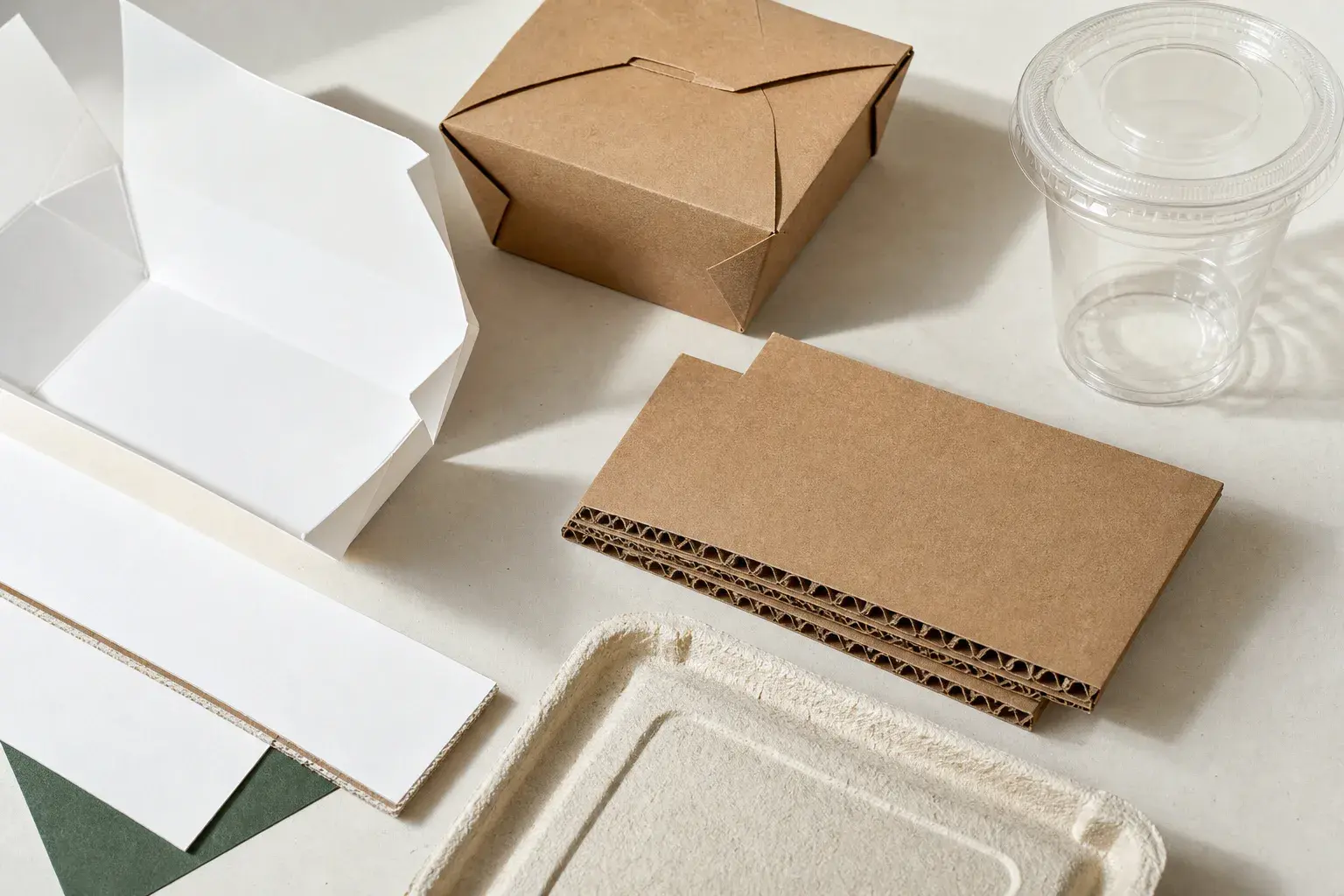
You are choosing board for a new carton. One sample is bright white. The other is natural brown. The right choice depends on what you want to print, pack and show.
The quick answer
Choose SBS for a clean white print surface or kraft for a natural paper look, then check the structure and product needs.
What we would ask next
Start with the look you actually want
If you were in our office, we would put an SBS sample and a kraft sample in your hands before talking about either one.
Choose SBS for clean colour
Say your carton has food photos, pale colours and small type. SBS is often the easier start. Its white surface lets colour show without fighting a brown base. But SBS does not tell you everything. Weight, coating, structure and finish still matter. Ask for a sample close to the carton you plan to make.
- You want a bright white base
- The artwork uses many colours
- Small details matter
- You want a clean folding carton
Choose kraft when the paper should show
Picture a black mark on warm brown board. The fibre is part of the design. Dark inks and bold shapes work well. Light colours may need white ink underneath, adding cost and a print step. Brown board is not proof of sustainability. Check the fibre, coating, barrier and recovery information before making a claim.
What should the customer notice first?
Common mistakes
Make sure the board can do the job
A nice colour will not help if the carton bends, tears or fails around the product.
Test the actual shape and weight
A small tuck box and large food carrier need different board. Build the real dieline and add the product. Check corners, locks, glue areas and panels. Does it bow or tear? More thickness may help, but it will not fix a poor structure. Adjust the shape before simply buying heavier board.
Tell the board what it will face
Will the carton meet grease, moisture, heat or refrigeration? Will food touch it? A coating or barrier changes performance, appearance and recovery options. Test the finished carton, not a plain swatch. If one flavour is oily and another dry, do not assume one test covers both.
| Consideration | SBS | Kraft |
|---|---|---|
| Base colour | Bright white | Natural brown |
| Print character | Broad colour range | Substrate influences colour |
| Visual tone | Clean and controlled | Tactile and natural |
| Approval | Proof colour and coating | Proof contrast and white ink |
If this were our project
Treat the board as the first ink colour
The same artwork can look like two different designs on white and brown board.
What SBS does well
SBS suits photos, pale colours, small reversed type and wide colour ranges. Coated and uncoated surfaces print differently. Do not approve colour from a laptop. Ask for a physical proof or close production sample. Fold it and inspect the edges. A flat sheet does not show the whole package.
Let kraft look like kraft
Kraft often looks best with fewer inks, open space and strong shapes. Let the brown surface work. If a brand colour must stay bright, ask about white ink, cost and registration limits. Do not print fake paper texture over real kraft. The board already has character.
What to do next
Put two fair samples side by side
Do not compare a finished SBS carton with a loose piece of kraft and call the decision made.
Use the same test for both
Make SBS and kraft samples with the same dieline, similar thickness and artwork scale. Fill both. View them under customer lighting. Check print contrast, scuffs, folds and cut edges. A fair test stops colour preference from hiding a performance difference.
Save more than the words “SBS” or “kraft”
Record the supplier, grade, thickness, coating, print process and barrier. Keep the approved carton with the artwork. Similar board names can behave differently. If a substitute appears, compare and test it. “Equivalent” is a claim to check, not a reason to skip the test.
What we would check with you
Before we recommend anything
- Define the product environment
- Compare equal-caliper prototypes
- Review print on the real board
- Test folds and locks when filled
- Verify environmental claims
- Record the exact approved grade