Questions we would ask first
- Inside dimensions, packed weight and product orientation
- Board grade, flute and structural style under review
- Case packing, pallet pattern, stacking time and storage
- Moisture, cold, handling and delivery conditions
Corrugated solutions
Dimensions, weight, board grade, unsupported space, pallet pattern, moisture and handling define the corrugated specification—not the words “single wall” or “double wall” alone.
See Where We'd Start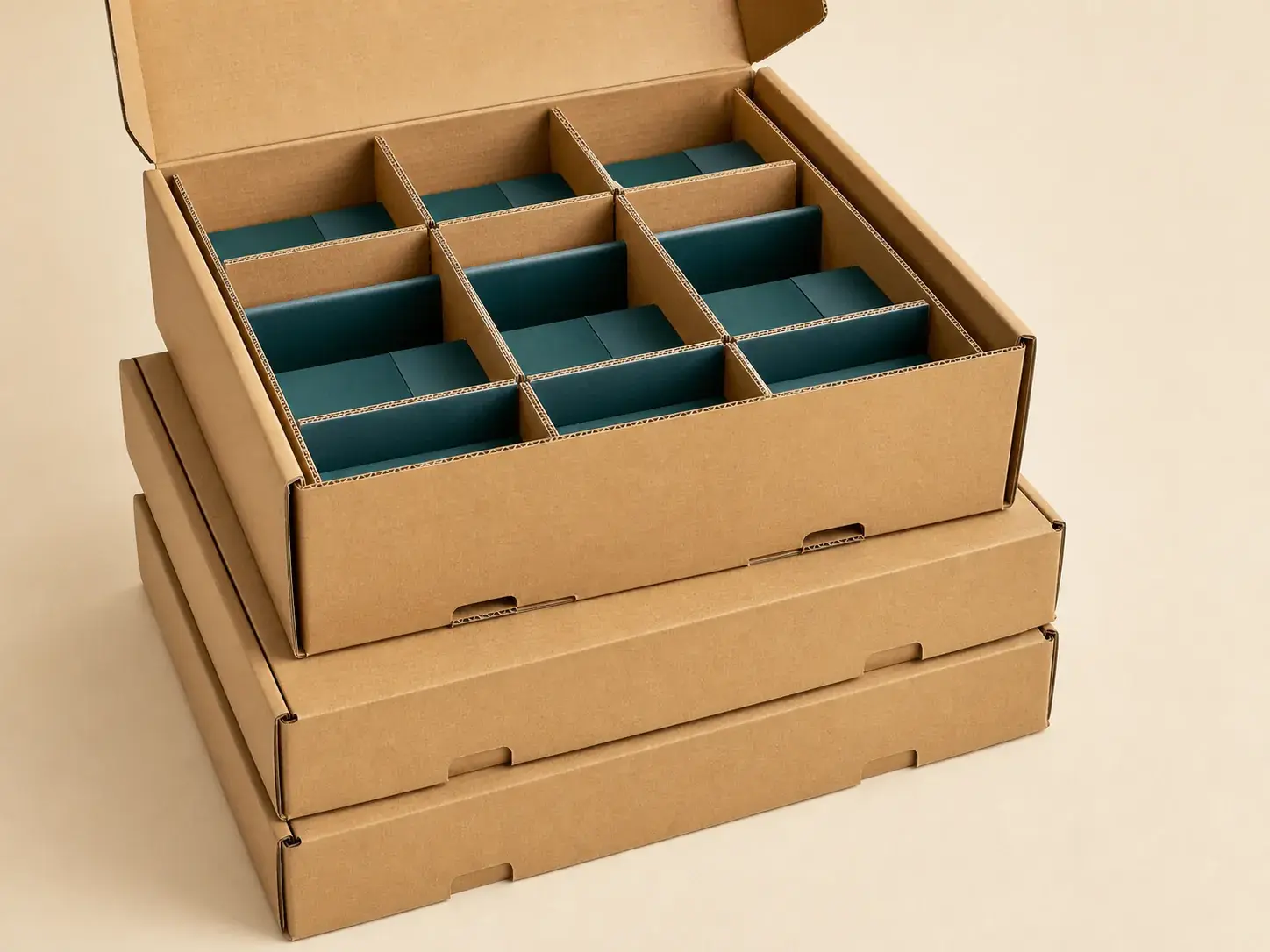
Common mistakes
Corrugated performance depends on more than board thickness. Product support, empty space, case orientation, pallet overhang, stacking time, moisture and handling can concentrate load in unexpected places. The review follows the full pack-out before changing flute, board grade or structure.
When this works well
These are the moments customers usually bring to us. Tell us where your situation is different.
Shipping cartons
Master cases
Retail-ready trays
Produce distribution
Multipack shipping
Palletized programs
What we'd recommend
We would not choose one until we understand the product, handling and customer experience.
Regular slotted cartons
Die-cut corrugated boxes
Retail and produce trays
Wraps and sleeves
Protective partitions and inserts
What customers usually ask
Product dimensions and weight, inner pack details, packing orientation, distribution steps, pallet expectations and identification needs are useful starting points.
Bring us the real request
Show us the packed box, pallet pattern and point where it usually fails. We will trace the cause.
What usually comes next