You asked
What packaging should I use for takeaway food?
You have a new menu item and three containers on the table. They all look fine when empty. The real question is simple: which one still works when the food is hot, packed and carried across town?
The quick answer
Is the food eaten right away, delivered or placed on a shelf? Use that answer to narrow the format, material and closure.
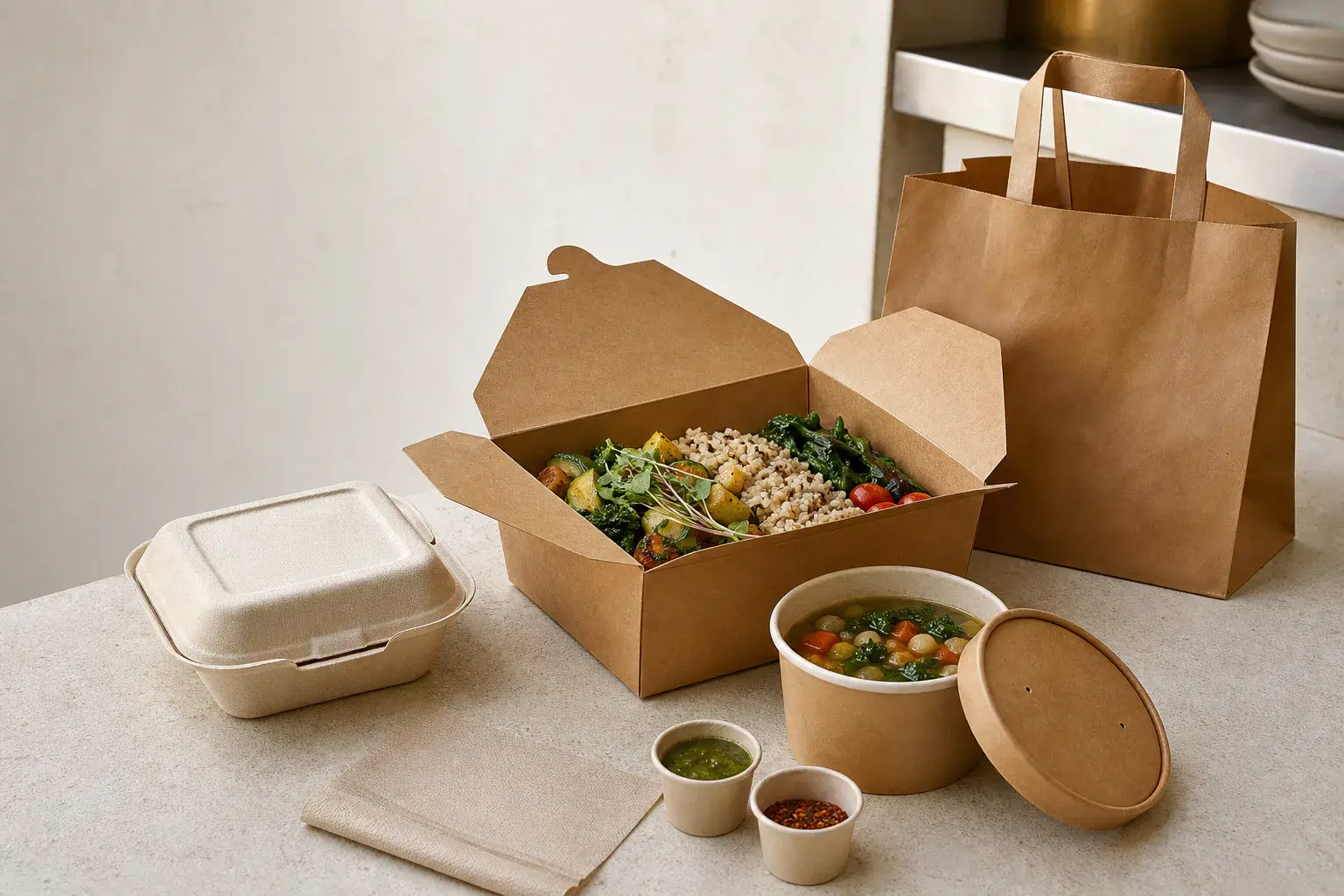
What we would ask next
Put the meal on the table first
If you were sitting in our office, we would ask to see the food before we showed you a container.
Ask what could go wrong
Picture two orders: hot soup and crispy fries. The soup needs a lid that stays put. The fries need a way for steam to escape. Write down the fill temperature, grease, liquid, steam and holding time. Those facts rule out bad options before looks or price take over.
- How hot is it when packed?
- Is it wet, greasy or crisp?
- How long will it sit?
- What could leak or get crushed?
Pack the real portion
A common mistake is testing an empty box. Fill it instead. Add the sauce, garnish and side. Does the lid crush anything? Does the meal slide? For takeout, choose a pack that closes easily and opens cleanly. For retail, also check what the customer sees on the shelf.
What are you packing today?
Common mistakes
Watch one order from start to finish
The best sample on a meeting table can still fail during a Friday-night rush.
Stand beside the person packing it
Watch someone build, fill and close the pack at normal speed. Do lids get mixed up? Does a carton pop open? A ready-made container is fast but takes more space. A flat carton stores well but needs folding. Choose the option your team can use correctly during a rush.
Take it for a real ride
Put the meal in the usual bag with a drink and side. Drive the normal delivery time. Then open it as a customer would. Use real food, because heat, grease and steam change the test. Look for leaks, soft walls, loose lids and a messy first view. Fix failures before printing.
| Format | Useful for | Watch closely |
|---|---|---|
| Folding carton | Dry or moderately greasy food | Assembly and closure |
| Moulded fibre | Meals needing a rigid base | Lid fit and holding time |
| Paper bowl | Soup, grains and sauced meals | Matched lid and temperature |
| Clear PET | Cold food and drinks | Condensation and local recovery |
If this were our project
Keep the packaging range easy to run
More choices can mean more mistakes, more storage and more stock to manage.
Use fewer pieces when they truly fit
Lay out every container, cup, lid and bag. Can two bowls share one confirmed lid? Can one carton handle two menu items well? That makes ordering easier. Do not force it. Saving one stock item is not worth soggy food or a poor fit. Keep the smallest range that treats each meal properly.
Print the pieces people notice
You do not need to print everything. A cup, bag or sleeve may carry the whole look. Start with what customers hold and see. Use the approved dieline and real material. Kraft, white board and fibre print differently. Keep key details away from folds and seams. Check quantities before choosing a custom format.
What to do next
Run a small test before the full order
Our recommendation is simple: spend one service learning before you spend months using the wrong pack.
Score what matters
Pack the same meal in each option at the same temperature. Use the normal label, bag and travel time. Score packing speed, leaks, heat, texture, stacking and opening. Ask the cook, counter team and driver about their part. “This feels nicer” is not enough. Record what happened.
Save the answer for the next order
Once a pack wins, record its code, size, material, lid, artwork and food use. Keep a photo and sample. Set the reorder point from weekly use, lead time and storage. Decide who can approve a substitute. Similar containers can fit very differently. A clear record keeps the problem from returning.
What we would check with you
Before we recommend anything
- Describe the food at packing temperature
- Test the real portion and holding time
- Follow the normal delivery route
- Review the complete bagged order
- Record every approved component
- Set a realistic reorder point